
Loading page.
Web platform for student org management - proposals, approvals, monitoring - built with Tailwind + vanilla JS.
Context
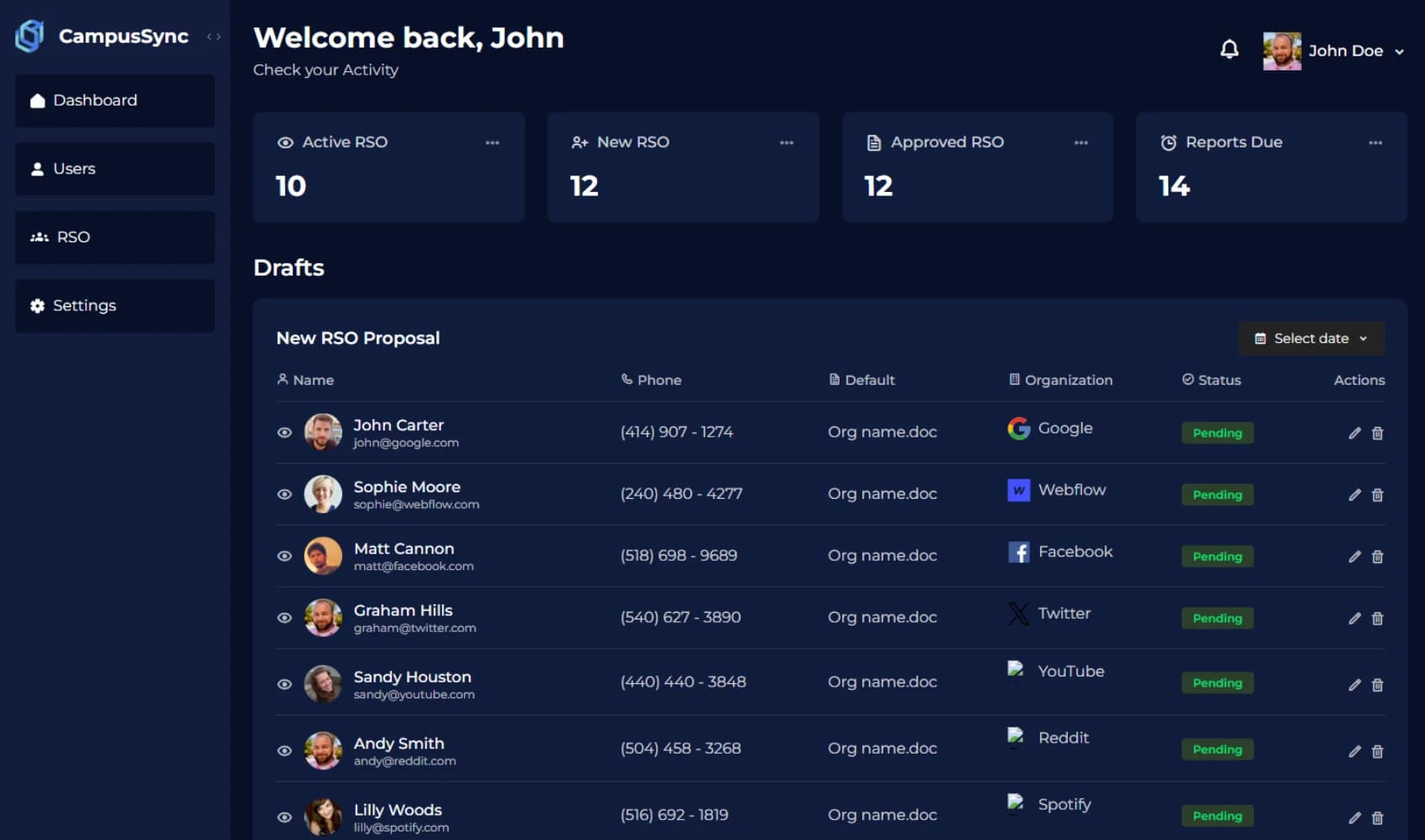
Activity proposals, registrations, approvals, and monitoring can become difficult when each step lives in a different document, message thread, or spreadsheet. CampusSync was built to test a more consolidated interface before committing to a full backend system.
Prototype
I led the scope and information architecture, then built the frontend using HTML, Tailwind CSS, vanilla JavaScript, and mock JSON data. The student side focused on submissions and transparent status tracking, while the admin view focused on review, approval decisions, and monitoring.
Using mock data let the team validate entities, permissions, and status handoffs quickly. The goal was not to pretend the prototype was production-ready, but to make the workflow visible enough to test and improve.
Product decisions
Before adding backend complexity, CampusSync clarified what records needed to exist, what statuses mattered, and where users would expect feedback. That made the prototype useful as a product planning artifact, not only a UI exercise.
Reflection
CampusSync helped me see how a prototype can reduce ambiguity. When stakeholders can click through a workflow, it becomes easier to discuss missing states, unclear handoffs, and unnecessary steps before the cost of change gets higher.